
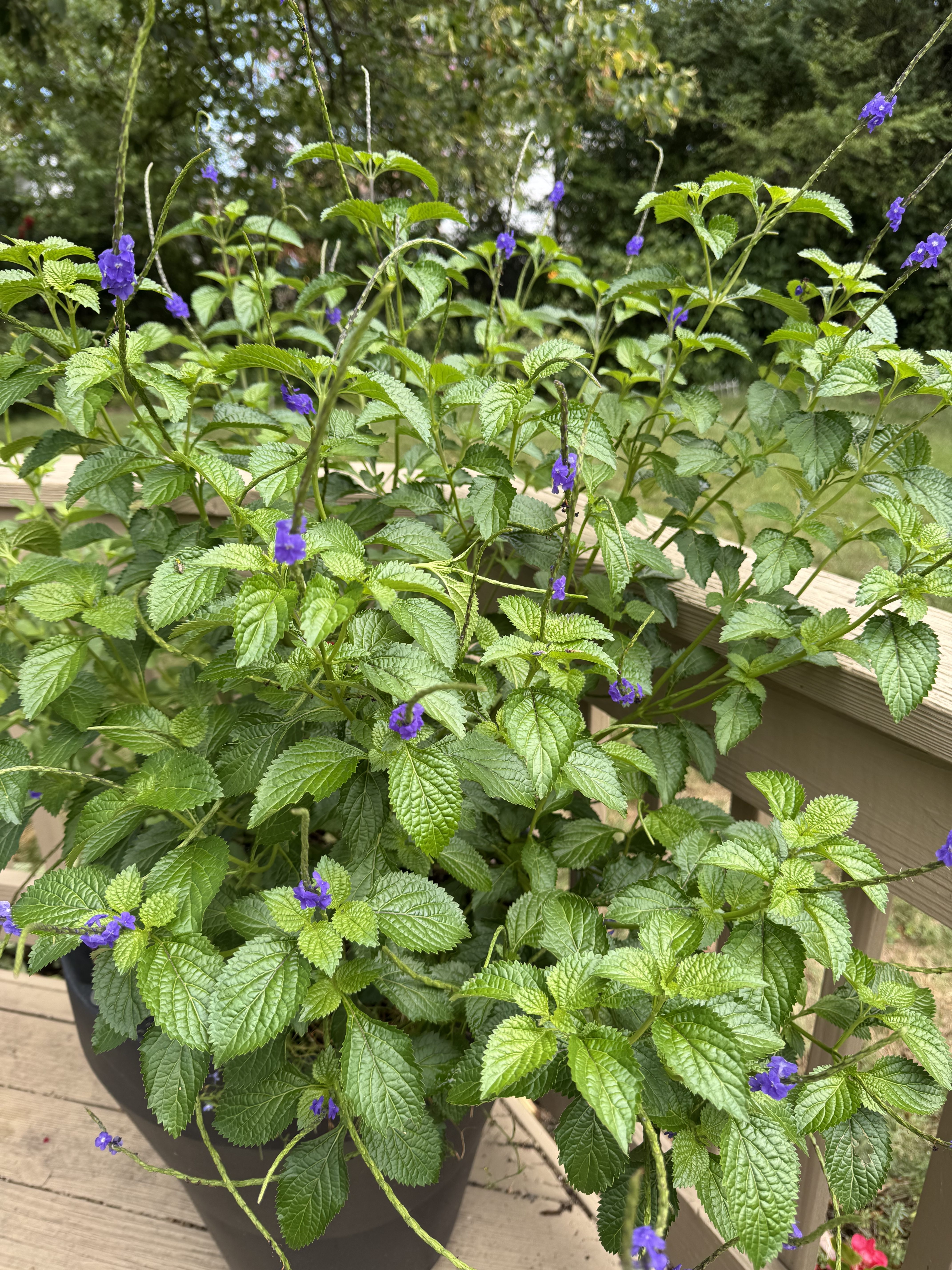
 I first saw porterweed (Stachytarpheta) in the butterfly house at the Norfolk Botanical Garden. Since then, I have seen the plant in other butterfly houses and conservatories. It is distinctive, you can’t miss it. The 1 to 2 feet tall wands wind about high above the dark green foliage with relatively few small flowers, but rich in nectar.
Members of the Verbenaceae family, there are 200 species of Stachytarpheta. Almost all are native to Australia, the Caribbean, and central and south America. One is native to south Florida: S. jamaicensis (blue flowers). Hardy to zone 8, they thrive in our hot and humid summers. They will bloom until frost but not survive the winter. The term “porterweed” comes from the fact that when a tea is made from the leaves, the tea looks like porter and foams in the same manner. There are species with medicinal qualities.
In search of a hummingbird plant, I purchased one purple flowered and one coral flowered porterweed plant from a vendor at the Green Springs Gardens plant sale in May (highly recommend this event). I planted both in a large container on the deck so I could watch the hummingbirds from the dining room window.
The purple flowered one is S. cayennensis, which has a host of common names such as blue snakeweed, cayenne snakeweed, nettle-leaf porterweed, blue rat’s tail, etc. Native to Mexico and central and south America, the plant was named for Cayenne, the capital of French Guiana.
The coral flowered plant is S. mutabilis. Both are grown the same way but I have noticed that the purple porterweed is much more robust, 2 to 3 times as big as the coral one.
Porterweeds have a very interesting flowering habit. The small flowers bloom sequentially, from the bottom of the spike to the top as the spike grows upward. There are only a few flowers on one spike at a time. The flowers open in the morning and fall off in the afternoon. They do not need to be deadheaded but the entire spike should be cut back when it is done blooming or turns brown.
 When you first look at the flowers, they seem flat. But if you get a side view, you can see the tubular structure, indicating a relationship with hummingbirds.
These plants can be small bushes, several feet tall and wide. I could have grown them in the ground for the summer. Although they can be grown from seed, the best way to propagate is cuttings from new growth in the spring. I fertilized my plants once in June. The high temperatures this summer have not been fazed them.
I do see butterflies and yes, Virginia, the hummingbirds visit every day.