


original four plants have multiplied on left side of walkway and have tan seed pods (directly across walkway is one balloon flower from front garden bed)
Part of problem is that balloon flowers self-seed very fast. The plants could be deadheaded to prevent self-seeding but this is a nerve racking, time consuming task. Each single seed pod has to be clipped off in order to leave the remaining buds or open blossoms. It is not possible to whack the entire plants down a foot. And part of the problem is that they are deer-resistant, drought-resistant, and generally pest free but the worst part is that balloon flowers have long, large tap roots. Breaking off the stem just encourages more stems to grow from the root. Although it is easier to pull and dig after it rains, I still spent hours pulling and digging to get the whole roots out as much as I could. I suspect I did not dig deep enough though, there probably are pieces in the soil that will rise again like the phoenix.

seeds landed on front strip across walkway (blooming with blue flowers)
Interestingly, I have found little reference to its invasive attribute on the internet. I did learn that the Kitazawa Seed Company catalog sells them and according to their description, the root, called doraji, is used in Korean cuisine. It is also used as an anti-inflammatory to treat colds and is considered a cheap ginseng substitute. The root can be dried and packaged for sale in Asian markets.
Unless you want to grow your own doraji for medicinal or culinary reasons, don’t plant this invasive perennial in your garden no matter how much fun you have popping the balloons.
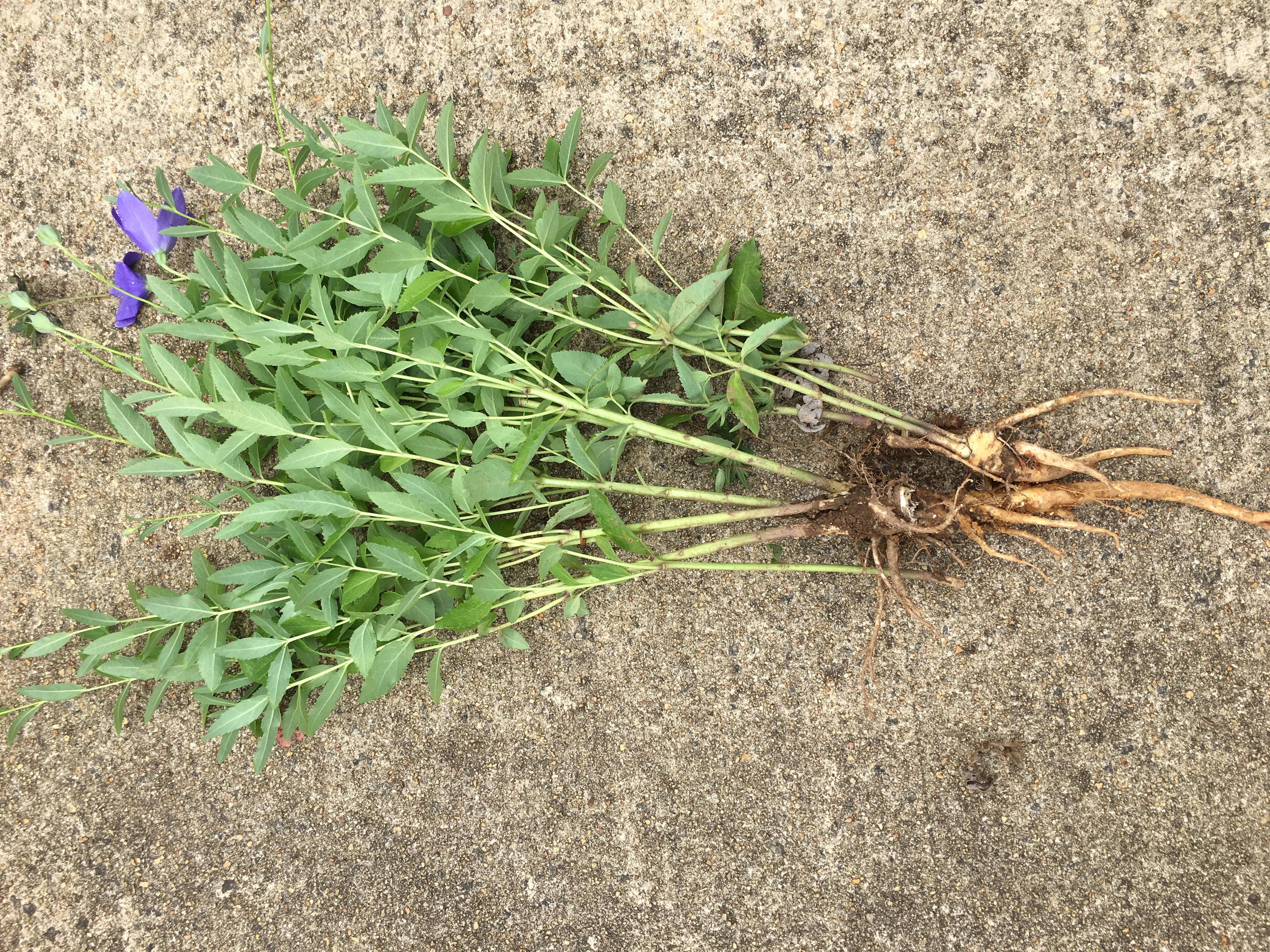
pulling to reveal tap root